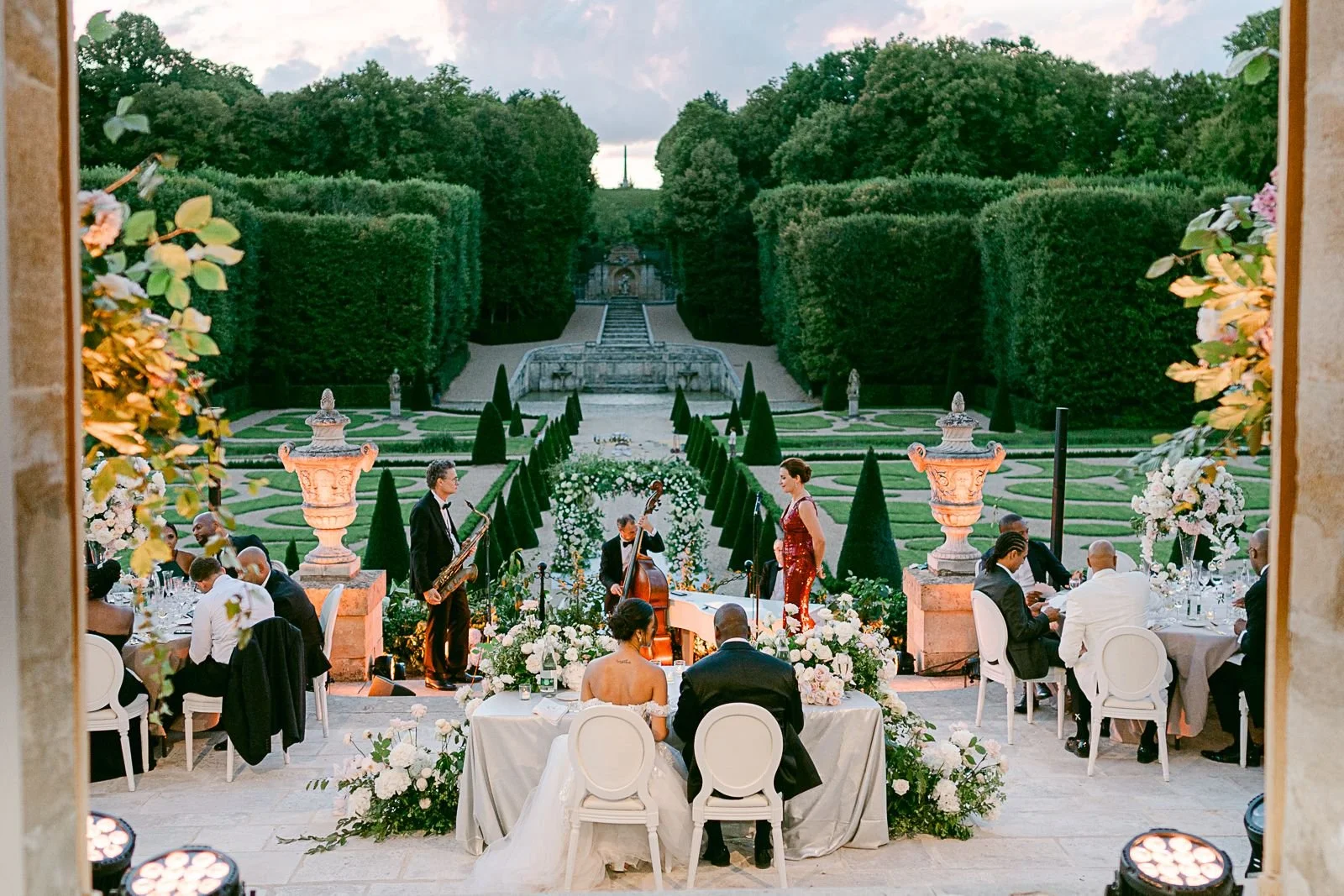
Artificial intelligence is changing how couples plan weddings.
Today, AI wedding-planning tools can help research venues, organize inspiration, compare options, draft timelines, and generate preliminary budgets. What once required hours of research can now happen in minutes.
For couples planning a luxury wedding, particularly a destination celebration or a multiday experience involving hundreds of guests, these capabilities can be genuinely useful.
But there is an important distinction between organizing a wedding and producing an extraordinary celebration.
AI can help you plan a wedding. It cannot independently deliver the taste, judgment, cultural understanding, and human care required to produce an exceptional experience.
And that distinction matters more than ever.
Can AI Really Plan a Wedding?
The short answer is yes, to a point.
AI wedding-planning tools can assist with many administrative and research-related tasks.
They can help couples create preliminary planning checklists, compare venues, explore design concepts, organize guest information, and develop draft schedules.
They can also help couples understand unfamiliar terminology and prepare more informed questions for potential vendors.
These are valuable capabilities.
At Kesh Events, we believe technology should support thoughtful planning and allow professionals to spend more time on the decisions that require experience, creativity, and personal attention.
But a generated recommendation is not the same as a professionally evaluated decision.
A beautiful digital mood board is not a fully developed design concept.
And a wedding timeline is only as valuable as the team's ability to execute it when circumstances change.
For couples investing in a luxury celebration, the distinction is significant.
1. AI Cannot Give You Taste
Taste is one of the most important qualities a luxury wedding planner and designer brings to a celebration.
AI can generate hundreds of wedding design ideas. It can identify popular color palettes, suggest floral combinations, and produce images inspired by virtually any aesthetic.
What it cannot independently provide is the personal, informed point of view that makes a celebration distinctive.
Taste involves knowing what belongs together, what should be removed, when to exercise restraint, and how to create something that feels authentic to the people being celebrated.
Consider two weddings with similar budgets, comparable venues, and access to the same creative resources.
One might be visually impressive.
The other might feel entirely original, deeply personal, and beautifully considered.
The difference is the creative perspective guiding the decisions.
At Kesh Events, design begins with understanding our clients, their stories, their preferences, and how they want their celebration to feel.
Technology may help us explore possibilities.
Human creativity determines which possibilities deserve to become reality.

2. AI Cannot Replace Professional Judgment
Luxury wedding planning involves thousands of decisions.
Some are straightforward. Others require experience, discretion, and the ability to understand consequences that may not be immediately obvious.
Should the ceremony begin later to accommodate an important family member?
Should the reception layout change to improve guest comfort?
Is a particular venue genuinely equipped to deliver the experience a couple envisions?
What happens when an elaborate design concept conflicts with the practical requirements of the space?
AI can analyze available information and suggest options.
But experienced wedding professionals are accountable for evaluating those options, making recommendations, and understanding how one decision affects the entire celebration.
Professional judgment also means recognizing when the original plan is no longer the best plan.
The most valuable wedding-planning decisions are not always the most obvious ones.
They are often the decisions guests never realize had to be made.
3. AI Cannot Take Command When Something Goes Wrong
Every experienced event producer understands an essential reality: even the most meticulously planned celebration requires adaptability.
Weather changes.
Transportation runs late.
A vendor experiences an unexpected challenge.
A guest requires immediate assistance.
A carefully planned moment needs to be adjusted.
Technology can help teams monitor schedules, communicate updates, and identify potential disruptions.
But when something unexpected happens, someone must assess the situation, establish priorities, coordinate the appropriate professionals, and make decisions in real time.
That requires leadership.
It also requires the ability to remain calm under pressure.
A luxury wedding should feel effortless to the couple and their guests, even when the production team is managing considerable complexity behind the scenes.
The ability to protect that experience is one of the most valuable things a professional planning and production team provides.
4. AI Cannot Fully Understand the Emotional and Cultural Meaning of a Celebration
Weddings are deeply personal.
They bring together families, traditions, relationships, histories, and expectations.
For multicultural weddings, these considerations can become particularly nuanced.
A Nigerian wedding, for example, may include traditions, family protocols, attire, music, and ceremonial elements that carry profound meaning.
Understanding these traditions requires more than identifying them in a planning checklist.
It requires listening to families, recognizing differences between individual customs, and understanding which elements are especially meaningful to the people involved.
Even within the same culture, no two families celebrate in precisely the same way.
AI can provide useful background information about cultural wedding traditions.
But cultural fluency requires conversation, context, sensitivity, and the willingness to ask thoughtful questions.
At Kesh Events, our approach to multicultural celebrations begins with understanding the people behind the traditions.
The goal is to honor what matters while creating a celebration that feels cohesive, personal, and beautifully produced.

5. AI Cannot Read the Room Like an Experienced Hospitality Professional
One of the most important aspects of a luxury wedding is something that cannot be captured in a photograph.
It is how people feel.
Consider a grandmother sitting quietly away from the celebration.
A parent who needs a private moment before the ceremony.
A couple who feels overwhelmed just before entering their reception.
Or a dance floor filled with guests having such a wonderful time that the planned transition should wait another few minutes.
These situations require observation, emotional intelligence, and the ability to respond appropriately.
In my speaking engagements, I often discuss the difference between managing an event and understanding the people experiencing it.
Technology can help coordinate the schedule.
But hospitality requires recognizing when the human experience deserves more attention than the schedule.
Exceptional hospitality is the ability to make people feel recognized, anticipated, understood, and genuinely considered.
That is the human advantage.
So, Should You Use AI to Plan Your Wedding?
Absolutely, when it serves the right purpose.
AI can be an excellent starting point for research, inspiration, and organization.
Couples can use it to prepare questions for wedding planners, understand planning terminology, explore design preferences, and begin thinking about the experience they want to create.
However, AI-generated budgets, vendor recommendations, and logistical plans should always be verified.
For complex celebrations, particularly luxury destination weddings and multiday events, professional oversight remains essential.
The most effective approach combines the efficiency of modern technology with the expertise of an experienced planning, design, and production team.
Technology can simplify the process.
Human expertise brings the vision to life.
The Future of Luxury Wedding Planning Is Human-Led
As artificial intelligence becomes more sophisticated, access to information and inspiration will continue to improve.
More couples will arrive at their first planning consultation with detailed ideas, preliminary budgets, and AI-generated concepts.
That can be a positive development.
But information alone does not create an extraordinary celebration.
What matters is how that information is interpreted, refined, and translated into an experience that reflects the people at its center.
Luxury wedding planning requires creativity, judgment, relationships, cultural understanding, and exceptional execution.
It requires knowing when to follow the plan and when to make a different decision.
Most importantly, it requires understanding that a wedding is an emotional experience shared by real people.
AI will continue to change the tools we use.
The human perspective behind an extraordinary celebration will remain its greatest advantage.
Planning an Extraordinary Celebration?
At Kesh Events, we specialize in global wedding planning, design, and production, creating thoughtfully considered celebrations that honor our clients' stories, traditions, and vision.
From our home in Chicago, we produce weddings and celebrations worldwide with a focus on exceptional design, cultural fluency, and extraordinary hospitality.
Explore our guide to luxury wedding cost per guest to understand the investment behind a thoughtfully produced celebration.
Frequently Asked Questions
Can AI replace a wedding planner?
AI can assist with research, scheduling, and organization, but it cannot independently replace the creative judgment, vendor relationships, cultural understanding, and on-site leadership of an experienced wedding planner.
What can AI do when planning a wedding?
AI can generate checklists, suggest design ideas, organize information, create preliminary timelines, and help couples prepare questions for wedding professionals.
Is hiring a luxury wedding planner worth it if I use AI?
For couples planning complex, highly personalized, or destination weddings, an experienced planner provides creative direction, professional oversight, vendor coordination, and on-site production that AI tools cannot independently deliver.
