What Is the Difference Between Wedding Planning, Design, and Production?
Understanding the three disciplines behind a beautifully executed wedding.
By Akeshi Akinseye | Founder, Kesh Events
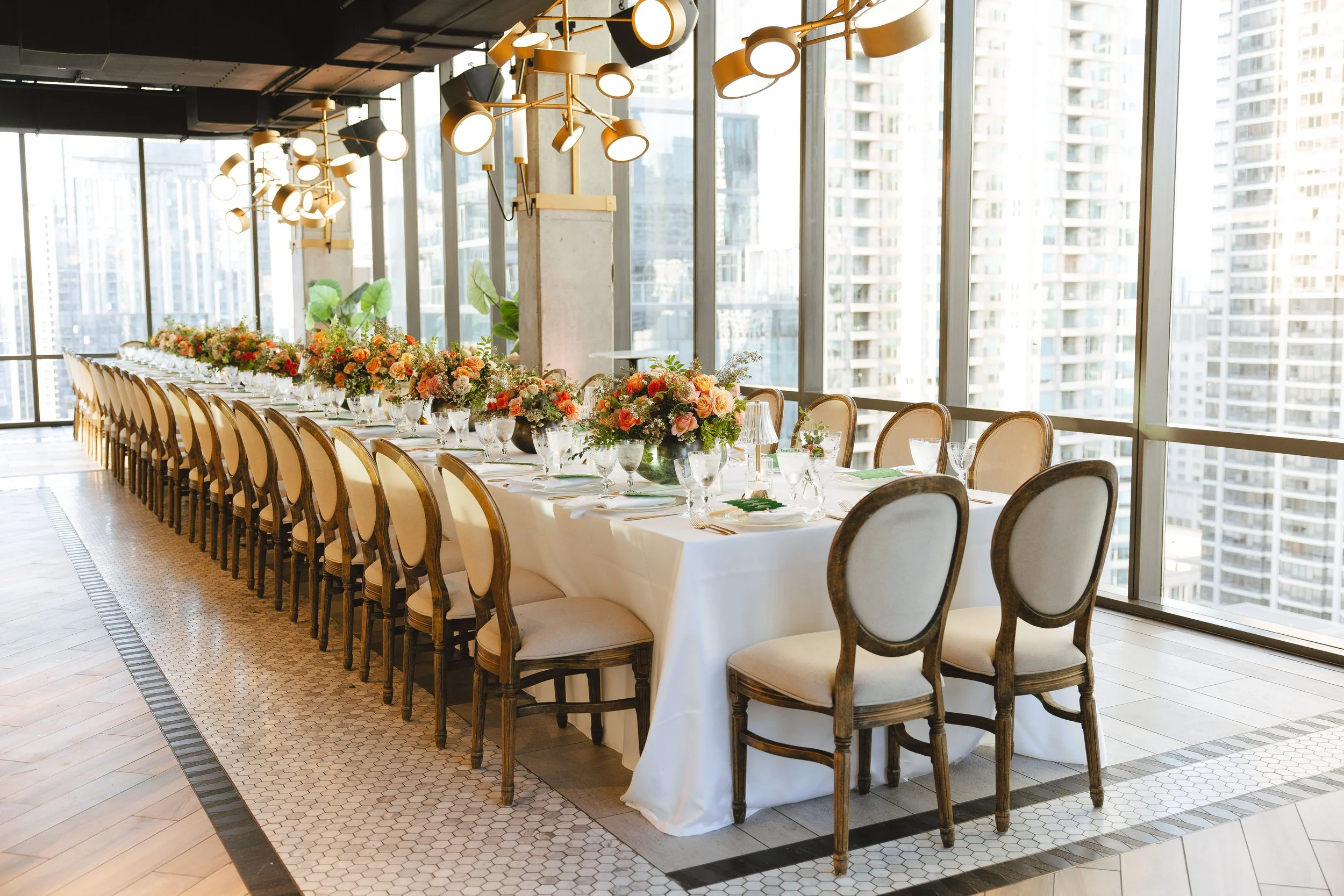
Photography by Hannah Schweiss
When planning a wedding, you will likely encounter terms such as wedding planner, wedding designer, and wedding producer. They are often used interchangeably, but they are not quite the same thing.
Each plays an important role in creating a successful celebration. Understanding the differences can help you determine what kind of support you need, what questions to ask, and how to build the right team.
For couples planning a high-end wedding, particularly a destination celebration, a multi-day wedding weekend, or an event involving several venues and complex logistics, these distinctions become even more important.
At Kesh Events, we believe the best celebrations are the result of thoughtful planning, intentional design, and exceptional production working together.
Wedding Planning vs. Wedding Design vs. Wedding Production: What's the Difference?
Simply put:
Wedding planning manages the overall process, from budgets and vendor selection to timelines, logistics, and guest arrangements.
Wedding design develops the creative vision, including the atmosphere, visual direction, spatial experience, and aesthetic details.
Wedding production coordinates the technical and operational execution required to bring the celebration to life.
Think of planning as the strategy, design as the creative direction, and production as the execution.
Although each discipline has a distinct responsibility, they are closely connected. A beautiful design must be supported by a realistic budget and an executable production plan. Likewise, an organized wedding needs thoughtful creative direction to become an experience that feels personal and cohesive.
Let's explore what each actually involves.
1. What Does a Wedding Planner Do?
A wedding planner oversees the overall planning process and manages the many decisions required to bring a wedding together.
The role extends well beyond creating timelines or recommending vendors.
An experienced wedding planner serves as a strategic partner, helping couples make informed decisions, manage their investment, navigate challenges, and move through the planning process with confidence.
Wedding planning responsibilities typically include:
Establishing and managing the wedding budget
Developing the planning strategy and overall timeline
Researching and securing venues
Identifying, recommending, and coordinating vendors
Reviewing proposals and coordinating contract details
Managing communications and planning meetings
Coordinating guest logistics and accommodations
Overseeing food, beverage, and entertainment planning
Developing detailed event schedules
Managing rehearsals and wedding-day logistics
Anticipating challenges and coordinating solutions
For a multi-day wedding, planning may also involve welcome celebrations, cultural ceremonies, transportation schedules, hotel room blocks, after-parties, and farewell gatherings.
The planner's responsibility is to ensure that the many moving parts work together.
At Kesh Events, planning begins with understanding the couple. Their priorities, expectations, family dynamics, traditions, and the kind of experience they want to create all influence how we approach the celebration.
Because the planning process itself matters.
Couples should be able to enjoy their engagement, feel confident in their decisions, and trust that the details are being thoughtfully managed.
For a deeper look at this role, read our article, What Does a High-End Wedding Planner Actually Do?.

Photography by Amy Anaiz | Location: The Langham Chicago | Plannning & Design: Kesh Events
2. What Does a Wedding Designer Do?
A wedding designer is responsible for developing the creative direction and overall aesthetic experience of the celebration.
While a planner manages how the wedding comes together, a designer determines how the environment should look, feel, and function.
Wedding design involves much more than selecting flowers, linens, or a color palette.
It requires an understanding of architecture, spatial relationships, lighting, materials, scale, and how guests will experience the environment.
Wedding design responsibilities may include:
Establishing the overall creative concept
Developing design presentations and visual references
Selecting color palettes, textures, and materials
Creating floor plans and spatial layouts
Designing floral installations and decorative elements
Directing furniture, tabletop, and linen selections
Developing lighting and atmosphere concepts
Collaborating on stationery, signage, and printed details
Designing ceremony and reception environments
Coordinating custom fabrication and installations
Overseeing the creative execution of the design
A strong wedding design should reflect the couple rather than simply reproduce an image they have seen online.
For example, a couple may want a celebration that feels romantic, sophisticated, and welcoming.
That direction can influence everything from the scale of the floral arrangements to the warmth of the lighting, the arrangement of the tables, and the way guests move between spaces.
The objective is not simply to create a beautiful room.
It is to create an environment that supports the experience the couple wants their guests to have.
Wedding Styling vs. Wedding Design
These terms are also sometimes confused.
Wedding styling generally focuses on arranging and refining visual elements, such as tabletop details, accessories, and decorative finishing touches.
Wedding design is broader. It establishes the creative concept and considers how all elements of the environment work together.
Styling may be one component of a comprehensive wedding design service.
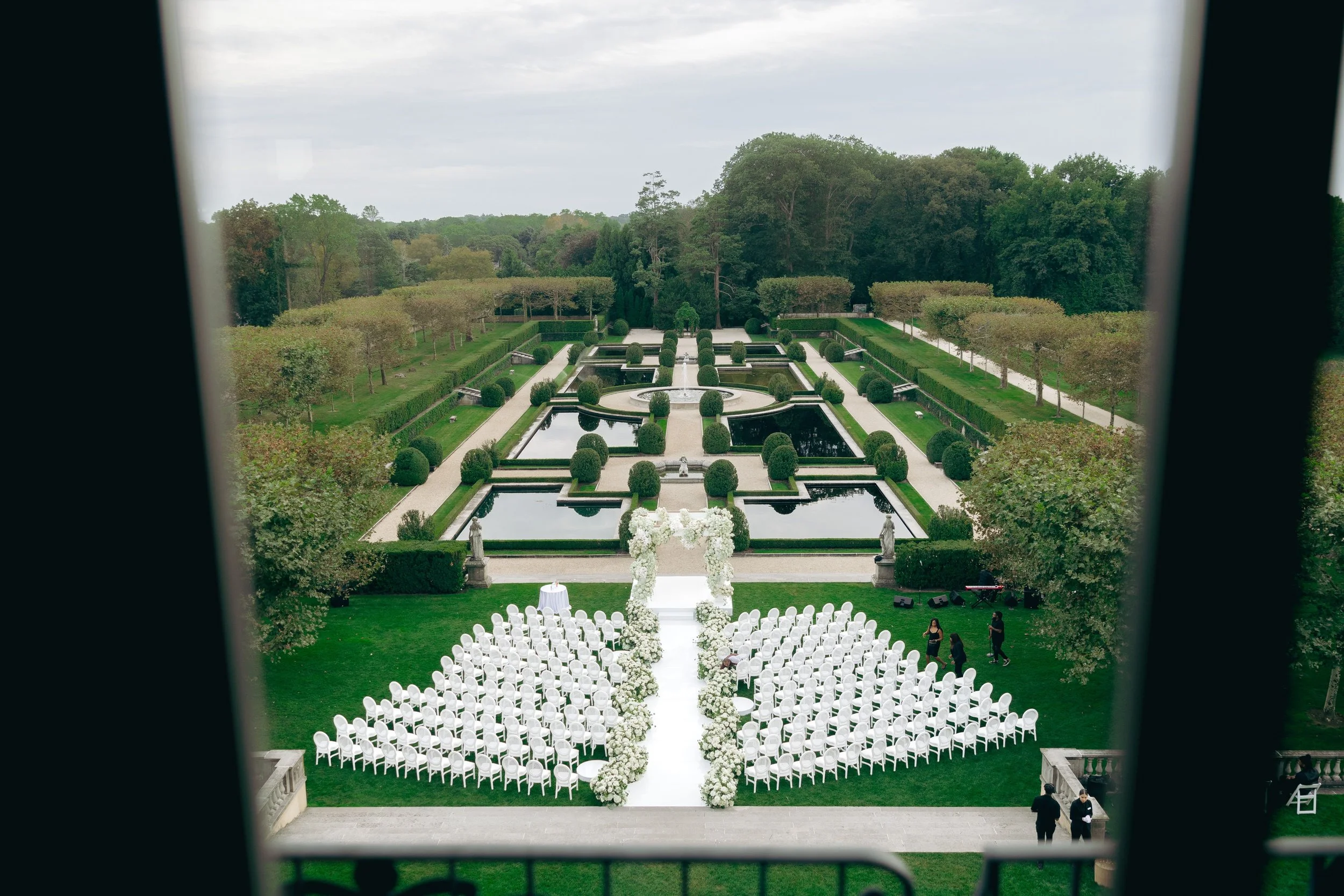
Photography by Reem Photography | Venue: Oheka Castle | Planning & Design: Kesh Events
3. What Does Wedding Production Mean?
Wedding production is the operational and technical process of turning an approved event plan and creative vision into a fully functioning celebration.
This is particularly important for high-end weddings that involve complex installations, multiple vendors, temporary structures, elaborate lighting, custom fabrication, or several days of events.
Production considers what must happen behind the scenes to ensure everything is properly installed, coordinated, operated, and removed.
Wedding production responsibilities may include:
Developing production schedules and installation timelines
Coordinating vendor load-in and load-out
Managing technical requirements and production partners
Overseeing staging, lighting, sound, and audiovisual elements
Coordinating custom builds and structural installations
Managing venue access and installation restrictions
Reviewing power, equipment, and infrastructure needs
Coordinating technical rehearsals and show cues
Managing event transitions and production timing
Overseeing breakdown and restoration requirements
Imagine a wedding reception taking place inside a completely transformed ballroom.
The design team may envision a dramatic floral installation, custom dance floor, layered lighting, and a beautifully furnished reception environment.
The production team determines how those elements will be installed, what equipment is required, how much time the installation will take, and how the various teams will work safely and efficiently within the venue.
Production is what makes an ambitious creative vision executable.
And when it is managed well, guests rarely notice the complexity behind it.
They simply enjoy the celebration.
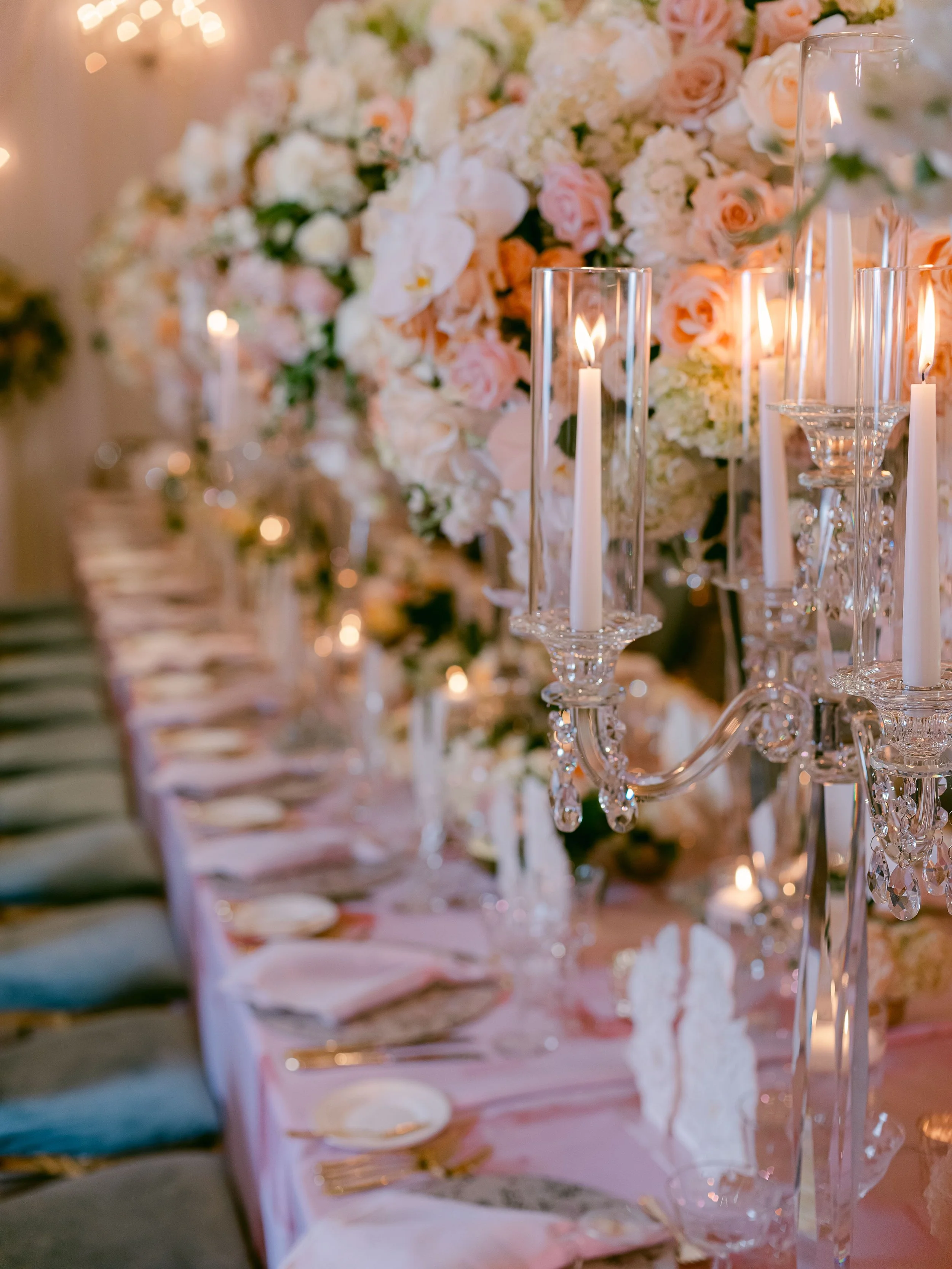
Photography by Lucy Munoz | Planning & Design: Kesh Events
4. How Wedding Planning, Design, and Production Work Together
Consider a couple hosting a three-day wedding celebration with guests traveling from several countries.
The weekend includes a welcome dinner, a traditional cultural ceremony, a formal wedding reception, and an after-party.
Each discipline has a distinct role.
The planning team manages the budget, venue contracts, guest accommodations, transportation, vendor coordination, event schedules, and overall planning process.
The design team develops a cohesive creative direction for the weekend, while giving each celebration its own identity. This includes the environments, floral concepts, lighting, furniture, and guest-facing design details.
The production team coordinates the installations, technical equipment, staging, entertainment cues, venue transitions, and operational requirements.
These responsibilities overlap, and the exact division of work depends on the team and the scope of services.
For example, an elaborate ceremony installation may require the planner to coordinate venue approvals, the designer to develop the visual concept, and the production team to determine structural and installation requirements.
All three disciplines must communicate from the beginning.
This is why an integrated approach can be especially valuable for complex celebrations.
For destination weddings, there is another consideration: how the location itself becomes part of the experience. We explore this further in The Destination Should Be Part of the Celebration: How to Create a Wedding Weekend With a True Sense of Place.
5. Do You Need a Wedding Planner, Designer, and Producer?
Not every wedding requires three separate companies.
The level of support depends on the scale, complexity, location, and expectations of the celebration.
For a smaller wedding with straightforward logistics, a planner may manage the process while coordinating with a florist, rental company, and other creative partners.
For a design-intensive wedding, a dedicated designer may be essential to developing and overseeing the creative direction.
For a large-scale wedding with custom installations, technical requirements, multiple venues, or extensive entertainment, professional production oversight becomes increasingly important.
Some full-service wedding planning companies offer integrated planning, design, and production management, while others collaborate with independent specialists.
Neither structure is inherently better. What matters is that responsibilities are clearly defined and the team has the expertise to deliver the proposed experience.
Questions to Ask Before Hiring Your Wedding Team
Before signing a contract, ask:
Does your company provide planning, design, and production services?
Which services are handled internally, and which require outside specialists?
Who develops and manages the overall wedding budget?
Who is responsible for creative direction and design approvals?
Who oversees installation, technical production, and vendor coordination?
How do you manage communication between the planning, design, and production teams?
Who will lead the wedding weekend on-site?
These questions help couples understand exactly what is included and where additional expertise or fees may be required.
You can also explore our Weddings & Destination Celebrations services to understand how Kesh Events approaches full-service planning, design, and production.
6. Why an Integrated Approach Matters for High-End Weddings
One of the biggest challenges in planning a complex wedding is ensuring that the creative vision, budget, and operational requirements remain aligned.
A design concept may be beautiful but difficult to execute within the available installation window.
A venue may be ideal aesthetically but present logistical challenges for entertainment, catering, or guest transportation.
A multi-day celebration may include several individually beautiful events that do not feel connected.
An integrated planning, design, and production approach allows these considerations to be evaluated together rather than separately.
It also creates a more cohesive experience for the couple.
Instead of making decisions in isolation, the team can consider how each choice affects the overall celebration.
At Kesh Events, we approach this work through the lens of hospitality.
We consider the experience from the first communication guests receive to the moment they depart.
How will guests arrive? What will they see first? Will the transitions feel comfortable? Is there enough time to enjoy dinner and entertainment? Have cultural traditions and family expectations been thoughtfully considered?
These are not exclusively planning, design, or production questions.
They require all three disciplines.
And they are essential to creating a celebration that is as thoughtfully managed as it is beautifully designed.
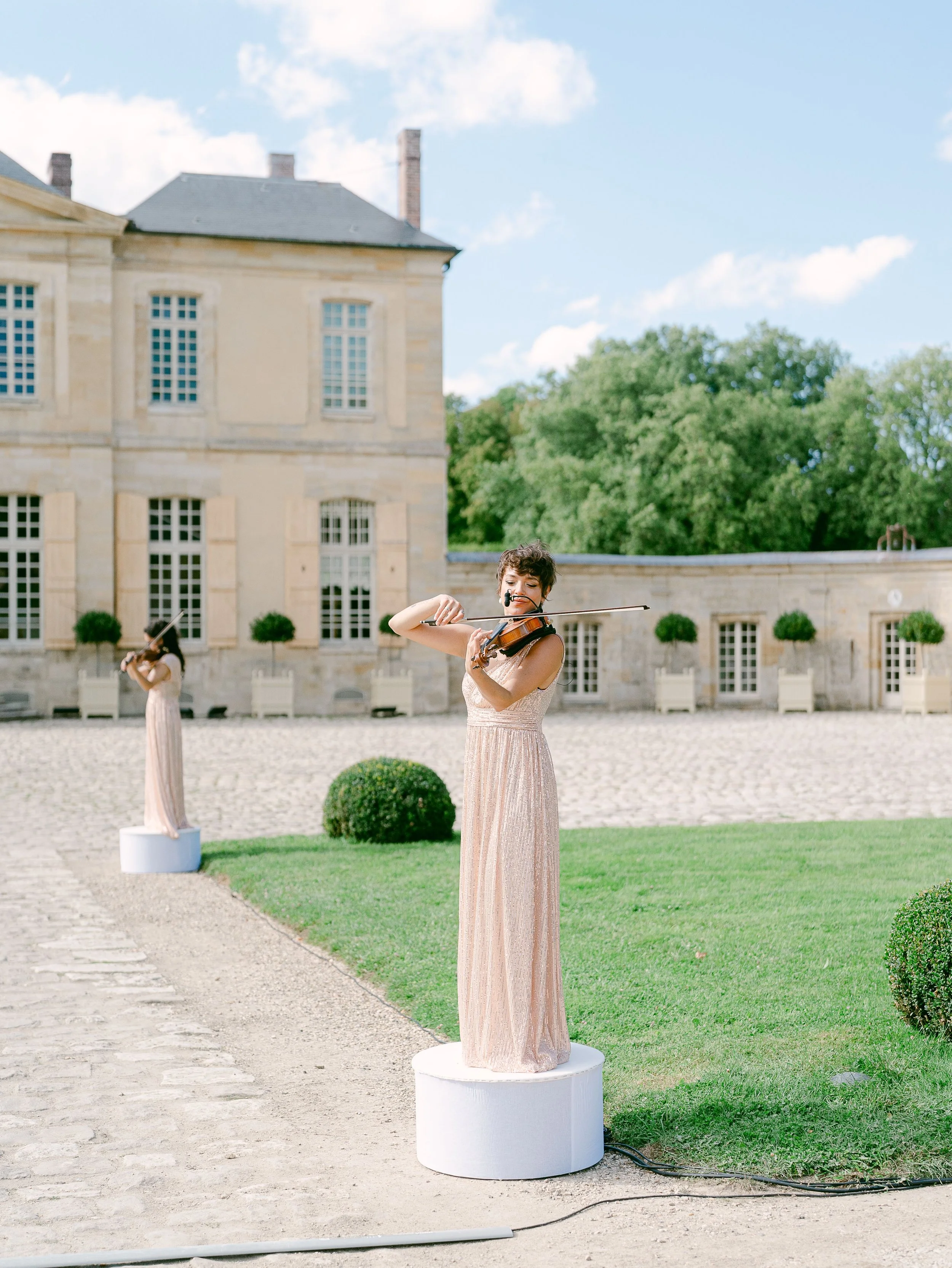
Photography by Lucy Munoz | Planning & Design: Kesh Events
Frequently Asked Questions
Is a wedding planner the same as a wedding designer?
No. A wedding planner primarily manages the planning process, logistics, budget, and vendor coordination. A wedding designer focuses on the creative concept, aesthetics, and physical environment. Some full-service companies provide both services.
What is the difference between wedding planning and wedding coordination?
Wedding planning generally begins months before the celebration and involves managing the overall planning process. Wedding coordination typically focuses on organizing and executing plans that have already been developed. The exact scope varies by provider.
Does a wedding planner handle wedding production?
Some full-service wedding planning companies manage production as part of their services. Others hire dedicated production professionals for technical elements such as staging, lighting, sound, and custom installations. Couples should confirm what their contract includes.
What is full-service wedding planning?
Full-service wedding planning generally involves comprehensive support from the early planning stages through the wedding celebration. Services may include budgeting, venue sourcing, vendor management, timelines, guest logistics, and event execution. Creative design and technical production may be included or offered separately.
For additional details, visit our Wedding and Event Planning FAQs.
Do destination weddings require additional production support?
Destination weddings may require more extensive production planning because of transportation, local regulations, venue restrictions, equipment availability, international vendors, and installation logistics. The level of support depends on the destination and complexity of the celebration.
A More Thoughtful Way to Plan Your Celebration
Planning, design, and production are distinct disciplines, but the strongest celebrations benefit from the expertise of all three.
Planning provides structure and leadership. Design creates the environment and creative direction. Production ensures the vision can be delivered.
Together, they allow couples to focus on the experience of celebrating while a professional team manages the decisions, details, and execution.
At Kesh Events, we specialize in full-service wedding planning, creative design, and event production for thoughtfully curated celebrations in Chicago and destinations worldwide.
Whether you are planning an intimate wedding, a multi-day celebration, or an elaborate destination experience, our approach begins with understanding what matters most to you.
We intentionally accept a limited number of celebrations each year to provide the level of attention and care our clients deserve.
Begin Your Private Inquiry to tell us about your upcoming celebration.
