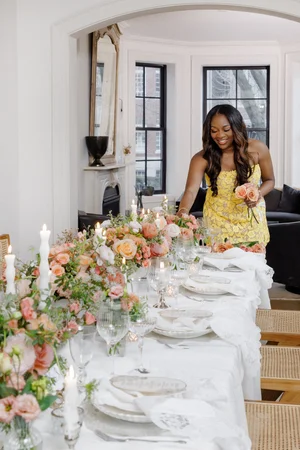
What Does a High-End Wedding Planner Actually Do?
By Akeshi Akinseye, Founder and CEO of Kesh Events
A high-end wedding planner manages far more than the wedding day. Full-service planning can include strategy, budgeting, venue and vendor management, creative direction, design, production, logistics, hospitality and the coordination of an entire wedding weekend.
When people hear “wedding planner,” they often think of timelines, vendor emails, seating charts and someone making sure the ceremony begins on time.
Those things matter. But at the highest level, the role is much broader.
A high-end wedding planner is responsible for turning hundreds of decisions, multiple creative partners, significant financial commitments and an increasingly complex guest experience into one cohesive celebration.
At Kesh Events, that work begins long before the wedding day. We think about the celebration as a complete experience, from the earliest planning decisions to the moment the final guest departs.

What does a full-service wedding planner handle?
The simplest answer is this:
A full-service wedding planner manages the entire experience, not simply the events happening on the wedding day.
Depending on the scope of the celebration, that can include overall planning strategy, budget development, venue research, vendor sourcing, creative direction, event design, floor plans, production, transportation, accommodations, guest communication, cultural and family considerations, wedding-weekend events and on-site execution.
But the value isn't simply in the length of that list.
It is in making sure all of those pieces work together.
The venue affects the design. The design affects production. Production affects timing. Timing affects hospitality. Guest count affects everything from catering and transportation to staffing and rentals.
Someone has to hold the entire picture.
That is the planner's job.
It starts with strategy, not flowers
Before selecting linens, flowers or stationery, we need to understand what we are actually creating.
Who are the guests? Where are they traveling from? What matters most to the couple? What matters to their families? Are there cultural or religious traditions that need to be thoughtfully incorporated? How do we want guests to feel? Where should the budget be concentrated? What logistical realities could change the experience?
Those answers create the foundation for everything that follows.
A strong planning process establishes priorities, budget, timing and a clear decision-making framework early so that the wedding doesn't become a collection of beautiful but disconnected choices.
For a large, destination, multicultural or multi-day wedding, that strategic foundation becomes even more important.
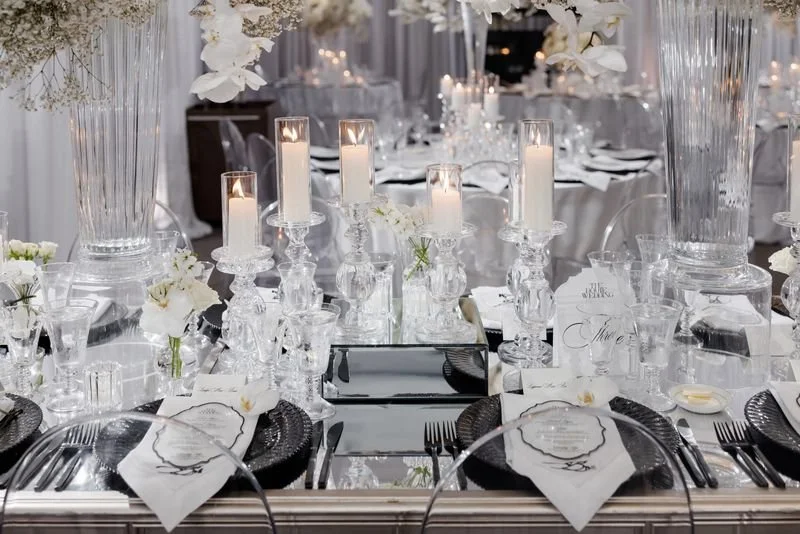
Photography by Amy Anaiz
Budget management is really decision management
A wedding budget isn't a spreadsheet that gets created once and checked occasionally.
It moves.
Increasing the guest count may affect the venue, catering, floral quantities, stationery, rentals, transportation, staffing and production. Changing the venue can introduce new infrastructure requirements. A more ambitious design can affect labor, installation schedules and technical production.
And when one wedding day becomes a three-day celebration, the financial picture changes again.
Our job is not simply to record what has already been spent. It is to help clients understand the relationship between decisions before they make them.
Where is additional investment going to meaningfully improve the experience?
Where won't it?
What needs to happen now?
What can wait?
Good planning creates clarity around those decisions.
Building the right team matters
Exceptional weddings require exceptional collaborators.
Depending on the celebration, that may include the venue, caterer, photographer, filmmaker, floral designer, stationer, entertainment, lighting designer, rental companies, transportation providers, beauty team and production partners.
The planner helps determine who belongs on that team and then manages the relationships between them.
By the wedding weekend, there may be dozens, sometimes hundreds, of people working behind the scenes.
The couple should never have to become the project manager for all of them.
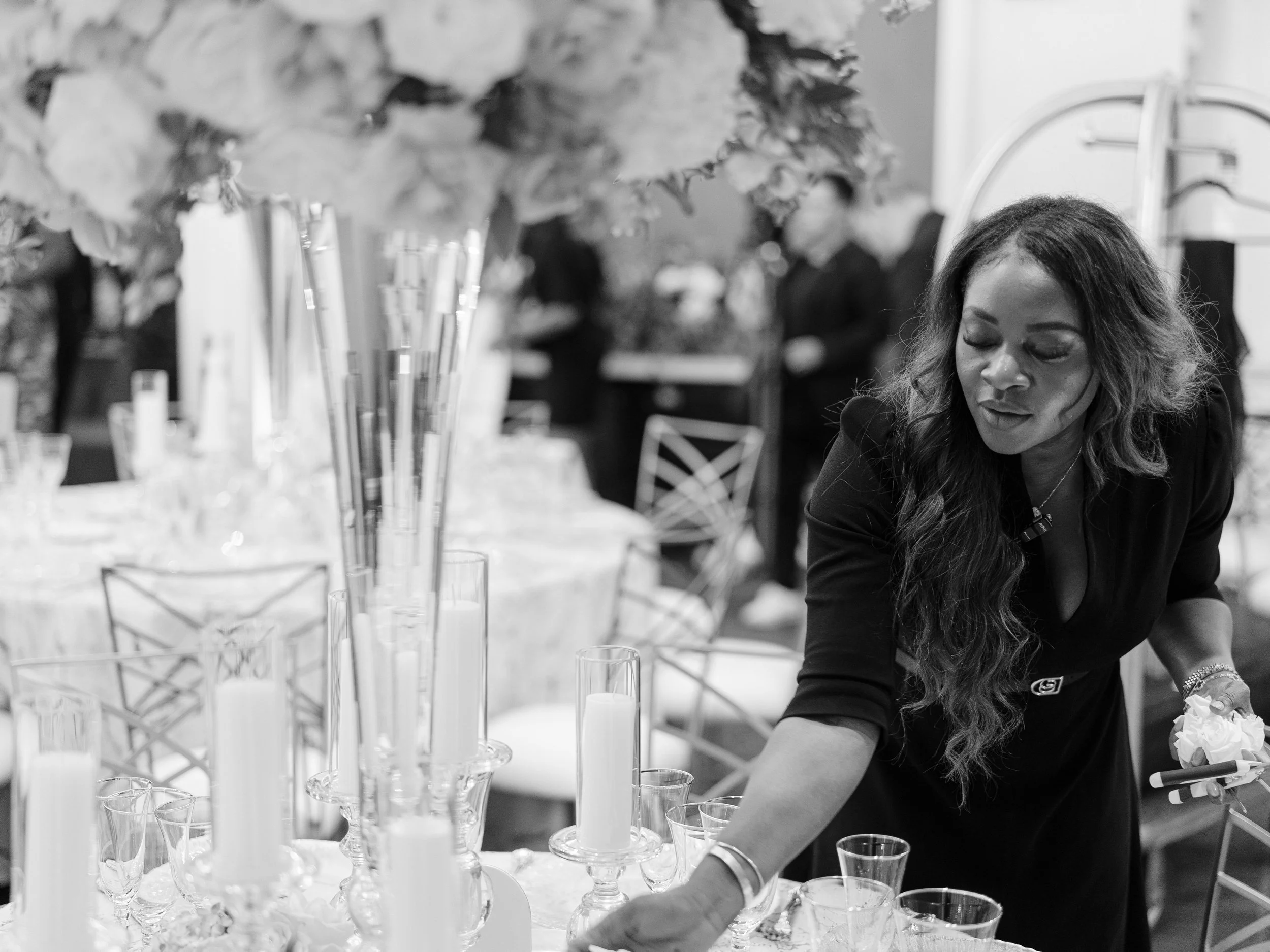
Photography by Candace Sims
Planning and design should never exist in separate worlds
Planning determines how the celebration works.
Design determines how it looks, feels and communicates the couple's story.
At Kesh Events, we believe the strongest celebrations happen when those disciplines are developed together.
A beautiful idea that cannot be installed within a venue's access window isn't a successful design. Neither is a spectacular room that creates bottlenecks for guests, interferes with dinner service or ignores how people will actually move through the evening.
Every design decision has a practical consequence.
And every logistical decision has the potential to affect the experience.
The two have to speak to each other.
Production is where the plan becomes real
Production is one of the least visible parts of a wedding to guests and one of the most important.
Behind a finished ballroom, tent or private estate may be loading schedules, installation teams, lighting, sound, staging, rentals, power requirements, security, permits, weather contingencies and tightly coordinated vendor access.
For complex celebrations, we are essentially building a temporary world and then dismantling it hours later.
The job is to anticipate what that world requires before anyone arrives to experience it.
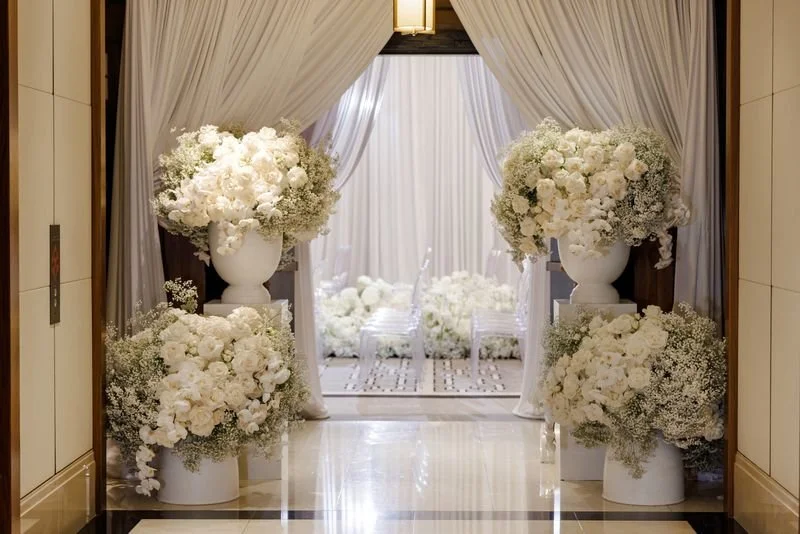
Photography by Amy Anaiz
The guest experience begins before the ceremony
For us, hospitality isn't an extra layer added after the wedding has been planned.
Hospitality is part of the planning.
A guest's experience can begin months before the celebration with the first piece of communication they receive.
For a destination or multi-day wedding, that experience can include travel information, accommodations, transportation, welcome details, dietary considerations, accessibility, event timing and knowing what is expected throughout the weekend.
Once guests arrive, we consider the journey from beginning to end:
Arrival → Recognition → Comfort → Participation → Connection → Departure
Where do guests go first?
Is the next step obvious?
Does transportation feel seamless?
Has someone considered what a guest might need before they have to ask?
Are there unnecessary periods of waiting?
Can guests with different needs comfortably participate?
Does the weekend create opportunities for people to actually connect?
A room can be extraordinary and the experience can still feel poorly considered.
Some of the best hospitality is found in the friction guests never experience.

Photography by Lucy Munoz
Destination and multi-day weddings require another level of coordination
When a wedding extends beyond one day or one location, the planner's role expands considerably.
There may be guests arriving from multiple cities or countries, hotel room blocks, transportation schedules, several venues, international contracts, local vendors, unfamiliar infrastructure and multiple events to coordinate.
A wedding weekend might include a welcome celebration, cultural or religious ceremonies, rehearsal dinner, wedding day, after-party and farewell gathering.
We don't believe those should feel like six unrelated events.
They should feel like chapters of the same story.
The guest should be able to move through the weekend without constantly wondering where to go, how to get there or what happens next.
Depending on the destination and scope, the planning team may also work alongside travel advisors, destination management companies and trusted local partners who manage specialized travel or destination services.
Our responsibility is to ensure those individual pieces connect to the larger experience.

Photography by Lucy Munoz
What happens on the wedding day?
Ideally, the couple sees very little of what the planning team is actually doing.
That's the point.
By the time guests arrive, vendors have their schedules. Installations have been coordinated. Transportation is moving. The wedding party knows where to be. The timeline has been distributed. The production team knows its cues. Contingency plans are already in place.
During the celebration, the planning and production team is managing everything in real time: vendors, transitions, timing, transportation, family needs, production details, guest questions and the unexpected things that inevitably happen at live events.
The couple shouldn't be answering vendor calls.
Their parents shouldn't be solving transportation problems.
The wedding party shouldn't be tracking down the photographer.
The guests shouldn't know there was ever a problem.
Our job is to protect the experience so the people at the center of it can actually be present for it.
So what are you really hiring a high-end wedding planner to do?
You're hiring someone to hold the whole picture.
To understand how the budget affects the design. How design affects production. How production affects logistics. How logistics affect hospitality. And how family, culture, travel, timing and hundreds of seemingly small decisions ultimately affect how the celebration feels.
At this level, wedding planning isn't simply about organizing an event.
It is about creating the conditions for people to be fully present inside an experience that has been considered from every angle.
The best planning rarely calls attention to itself.
Guests simply feel that everything works.
That is the work.
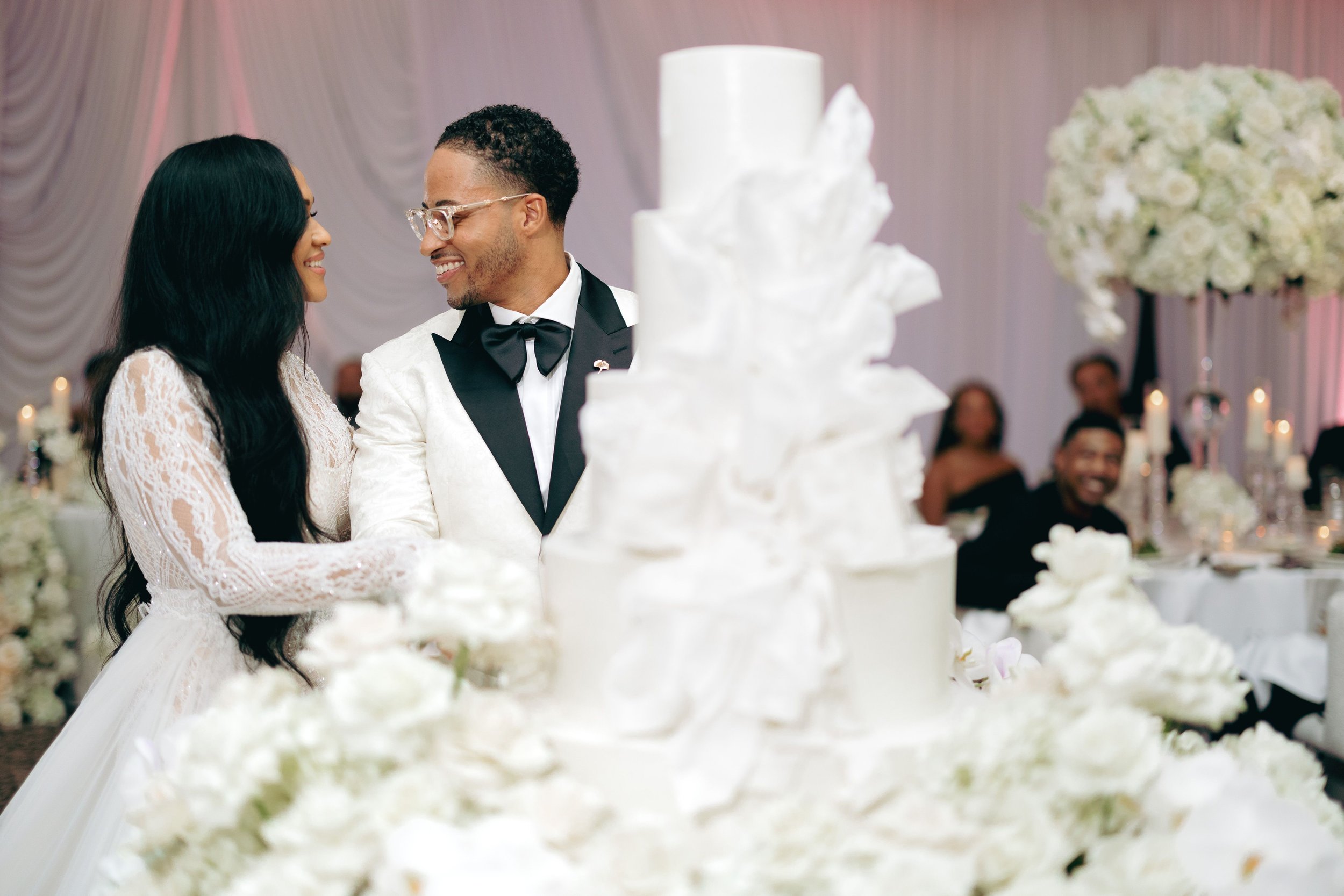
by
Planning a wedding or multi-day celebration?
Kesh Events is a Chicago-based wedding and event planning, design and production company creating high-end weddings, destination celebrations and private experiences in Chicago and destinations worldwide.
Led by founder and CEO Akeshi Akinseye, our work brings together thoughtful planning, creative direction, precise production, cultural intelligence and a deep consideration for how every guest experiences the celebration.